

Why data quality is the real ceiling on procurement performance and why it is killing your AI investment before it starts.
By Soumitra Banerjee | Associate Director – Practice Lead, Global Sourcing, Supply Chain | BPG X-PM Asia
Most procurement leaders cite supplier risk, cost pressure, or digital transformation as their biggest challenges. Few point to data. Yet in organisations struggling to realise savings, improve compliance, or scale AI tools, the root cause is often the same: the underlying procurement data is broken.
This is not a technology problem. It is a data problem technology has been asked to solve and cannot.
Four Ways Your Data Is Failing
Procurement data degrades in four predictable ways.
Fragmentation occurs when the same supplier exists under multiple names across systems. Spend is split, leverage is lost, and consolidation becomes theoretical. Ardent Partners suggests up to 15% of category spend is missed as a result.
Duplication is more pervasive than most teams realise. Dataversity reports that 92% of businesses acknowledge duplicate records, redundant vendors, repeated SKUs, and distorted volume figures.
Classification gaps sit at the centre of the visibility problem. When 30 to 50% of spend falls into “miscellaneous” or “general,” strategic sourcing becomes guesswork. Spend Matters estimates only 50 to 70% of spend is meaningfully classified in the average enterprise.
Staleness is the slowest killer. Supplier master records decay rapidly after ERP golive. The Hackett Group estimates more than 60% become materially outdated within 24 months.
Three Costs That CompounD
The first cost is savings leakage. Maverick buying purchases made outside contracted channels because catalogs are incomplete or untrusted erodes 10 to 20% of targeted savings, according to the Hackett Group.
The second cost is compliance erosion. Average enterprise contract compliance sits around 59.5%, while world-class performers reach 74.9% (Ardent Partners, 2024). Buyers default to familiar suppliers when guided buying is absent, catalogs are outdated, or contracts are disconnected from spend data.
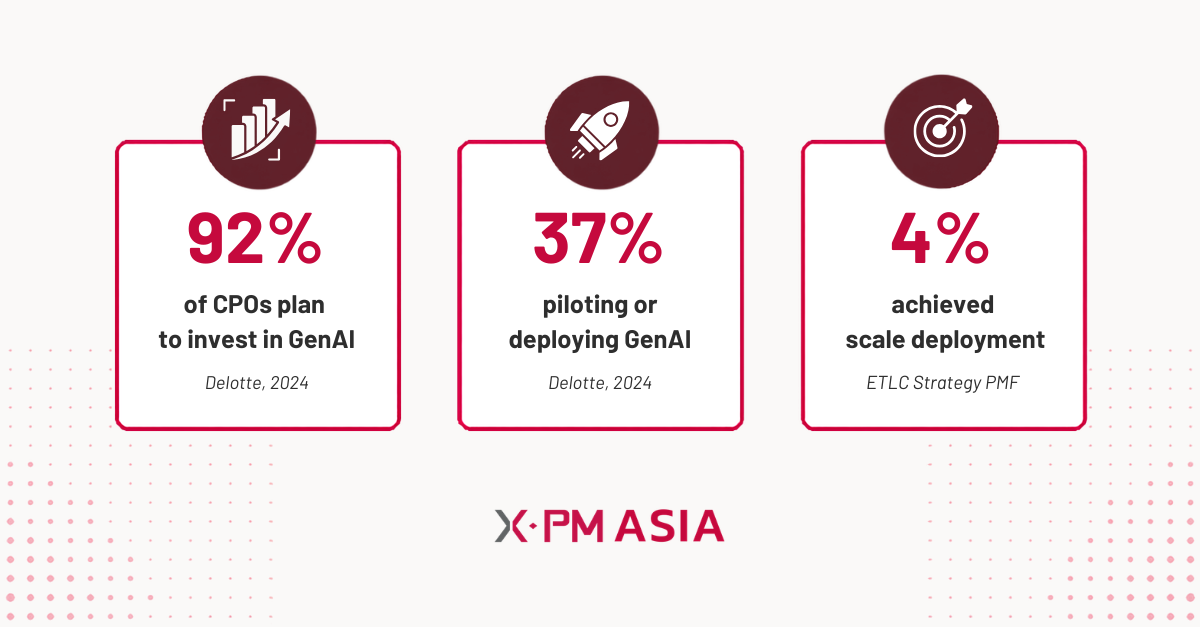
The third and increasingly urgent cost is stalled AI investment. Deloitte’s 2024 Global CPO Survey found that 92% of Chief Procurement Officers plan to invest in generative AI. Only 37% were piloting or deploying it, and just 4% had achieved scaled deployment. Deloitte cites data quality as a primary internal barrier.
The reason AI pilots stall is not the AI. It is the data underneath it.
What Good Looks Like
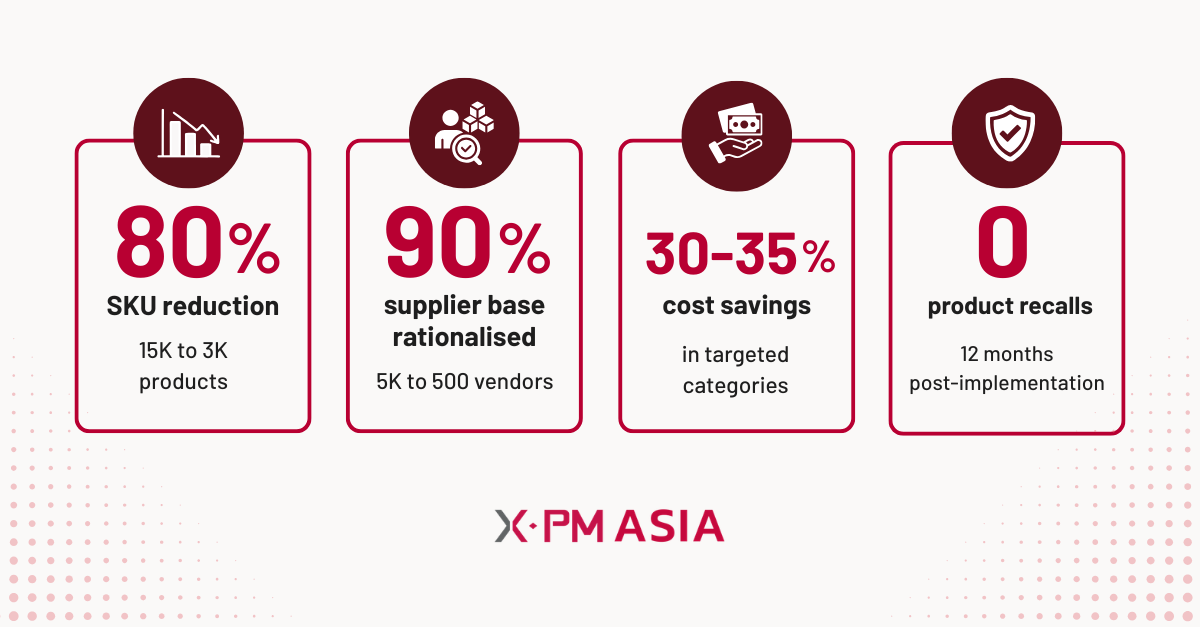
A global beverage company, a company listed on the Fortune Global 500, attempted tailspend digitisation twice before succeeding on a third engagement. The organisation managed more than 15,000 fragmented SKUs, over 5,000 suppliers without profiling or performance data, and more than 80,000 manual transactions annually with no governance or automation.
The turnaround followed three phases: cleanse and normalise spend data, consolidate duplicate SKUs and catalogs, then rationalise suppliers through performance-rated profiles.
The results were significant:
The Three Step Framework
Step one: Visibility
Classify spend, deduplicate suppliers, and map taxonomy to create a unified spend view and savings roadmap.
Step two: Governance
Controlled catalogs, guided buying, and supplier validation workflows prevent data from deteriorating again.
Step three: Intelligence
AI-scored RFQs, predictive analytics, and benchmark dashboards begin delivering value. But AI only amplifies what exists in the data. If the data is wrong, the AI scales the problem.
What Becomes Possible
When procurement data is clean and governed, strategic sourcing moves from estimation to evidence. Sustainable savings of 5 to 15% become repeatable. Compliance becomes measurable. Non-catalog purchasing falls. AI investments begin delivering the ROI promised.
Most importantly, procurement gains credibility by speaking the language leadership responds to: savings realised, risk mitigated and spend under management.
Where to Start
Data readiness does not require a 12-month transformation programme before value becomes visible. It starts with an honest assessment of spend classification rates, supplier duplication rates, and AI readiness.
That assessment creates a quantified baseline and prioritised roadmap. Technology deployed on clean foundations can prove value within 60 to 90 days.
The question is not whether procurement data has a problem. In most organisations, it does. The question is how much that problem is costing and whether the organisation knows.
Every AI programme. Every sourcing strategy. Every procurement decision. Only as good as the data underneath it.
Source material: Powerweave / ProcureConnect Confex Mumbai, April 2026. Statistics drawn from Ardent Partners, Dataversity, Spend Matters, Hackett Group, and Deloitte 2024 Global CPO Survey.
Recent Comments